
Hybrid Search Approach for Enhanced Chatbot Performance Using Databases and Elasticsearch
- Author
- Ulaş Renas ORDU
- Published
- Language
- English
Abstract
Modern chatbot systems face challenges when dealing with large volumes of structured and unstructured data. This paper proposes a hybrid search approach combining databases and Elasticsearch to optimize chatbot performance. By leveraging both technologies through decision-making mechanisms, parallel and sequential search strategies, and machine learning support, this approach significantly improves response accuracy and efficiency.
1. Introduction
As digital interactions grow, chatbots have become essential in enhancing user experiences and optimizing business processes. However, the increasing volume and complexity of data present challenges in retrieving accurate and timely responses. Traditional databases handle structured data effectively, but they fall short when dealing with unstructured or semi-structured content. On the other hand, Elasticsearch excels in full-text search and flexible queries but lacks the transactional reliability of databases. To address these limitations, this paper introduces a hybrid search strategy combining databases and Elasticsearch, offering a balance between accuracy, speed, and flexibility.
2. Methodology
2.1 Hybrid Search Architecture
The proposed architecture integrates relational databases and Elasticsearch into a unified search system:
- Databases: Handle structured data, such as user profiles, order histories, and product catalogs, using relational queries.
- Elasticsearch: Manage unstructured or semi-structured data, including logs, product descriptions, and user-generated content, with full-text search capabilities.
This architecture ensures the efficient retrieval of both exact matches from databases and flexible keyword-based results from Elasticsearch.
2.2 Decision-Making Mechanism
To optimize search performance, a decision-making mechanism is employed:
- Simple Queries: Directed to databases for fast and precise retrieval.
- Complex Queries: Directed to Elasticsearch for keyword matching and fuzzy searches.
The system analyzes incoming prompts using natural language processing (NLP) techniques to determine the appropriate search engine.
2.3 Parallel and Sequential Search Strategies
Two key strategies are utilized:
- Parallel Search: Both databases and Elasticsearch are queried simultaneously, and the most relevant results are returned.
- Sequential Search: Initially queries the database, and if no or insufficient results are found, Elasticsearch is consulted.
Parallel search minimizes response time, while sequential search ensures efficient resource usage.
2.4 Machine Learning Support
Machine learning models are incorporated to enhance decision-making and improve long-term performance:
- Learning from Patterns: The system continuously learns which types of queries yield better results from each search engine.
- Adaptive Routing: Based on historical data, the system can predict the optimal search strategy for new queries.
3. Analysis and Discussion
3.1 Parallel Search: Pros and Cons
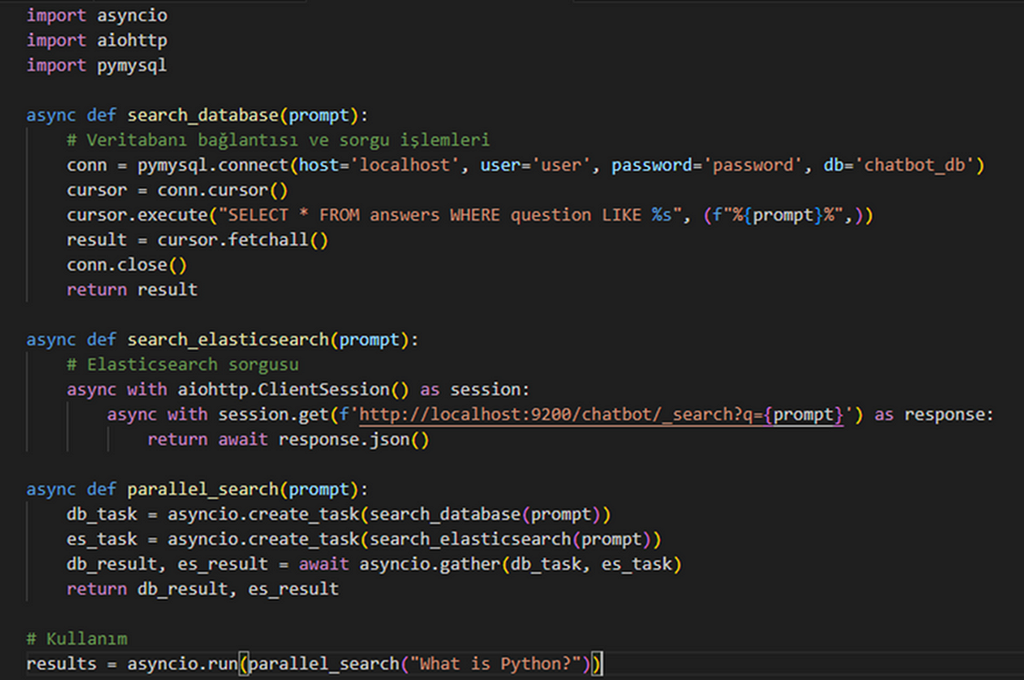
Advantages:
- Speed: Simultaneous querying reduces overall response time.
- Flexibility: Utilizes both structured and unstructured data sources.
- Comprehensive Results: Broader result sets provide more relevant responses.
Disadvantages:
- Resource Usage: Increased CPU and memory demands.
- Integration Complexity: Requires merging and ranking results from two systems.
- Maintenance Costs: Managing two search systems incurs additional operational expenses.
3.2 Prompt Analysis through NLP
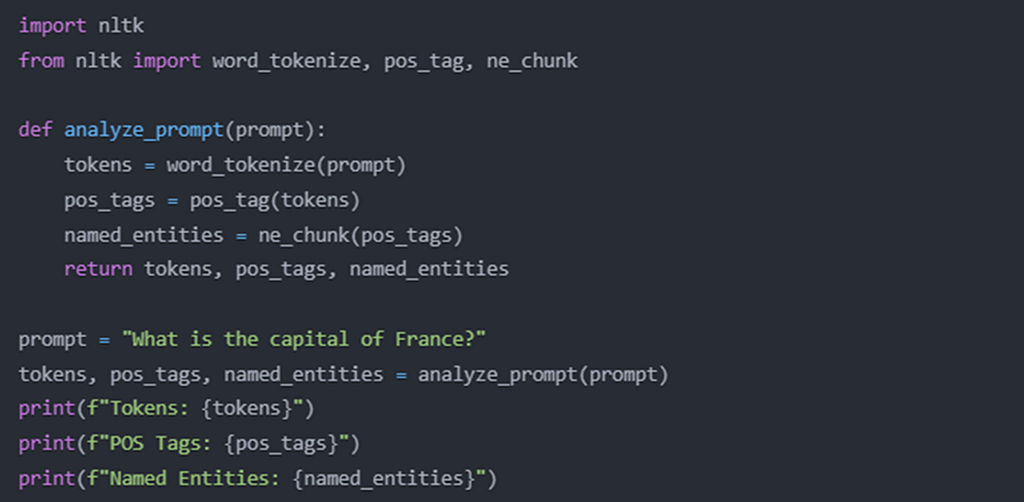
NLP techniques, including tokenization, intent classification, and entity recognition, are critical in understanding user prompts and routing them effectively.
Advantages:
- Improved Accuracy: Enhances understanding of user intent.
- Customized Responses: Tailors search strategies based on prompt type.
Challenges:
- Language Dependency: Requires separate models for different languages.
- Processing Overhead: Additional computation increases response time.
3.3 Machine Learning Integration
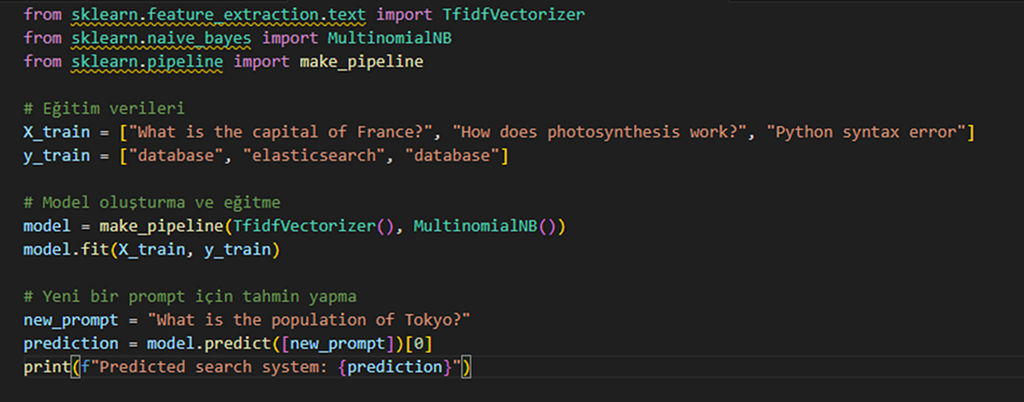
The use of machine learning enables the system to adapt and improve over time:
Advantages:
- Personalization: Learns user preferences and optimizes responses.
- Continuous Improvement: Regular updates enhance decision-making accuracy.
Challenges:
- Data Requirements: Initial training requires a substantial dataset.
- Model Maintenance: Ongoing updates and monitoring are necessary.
4. Results
Preliminary evaluations demonstrate that the hybrid search system enhances chatbot performance by:
- Reducing average response time through parallel search.
- Increasing accuracy by correctly routing queries based on prompt analysis.
- Improving user satisfaction by delivering more relevant responses.
5. Conclusion
The hybrid search approach effectively addresses the limitations of traditional search systems by combining the strengths of databases and Elasticsearch. The integration of decision-making mechanisms, parallel and sequential search strategies, and machine learning ensures scalable and adaptive performance improvements. Future work can focus on extending this model with multilingual NLP support and advanced machine learning techniques for even greater personalization and accuracy.
6. References
- DataCamp. “Understanding Text Classification in Python.” https://www.datacamp.com/tutorial/text-classification-python
- Lucidworks. “Hybrid Search Systems: Apache Solr and RDBMS Integration.” https://lucidworks.com/
- NLTK Documentation. “Natural Language Processing for Chatbots.” https://www.nltk.org/
- spaCy Documentation. https://spacy.io/
- Python AsyncIO Documentation. https://docs.python.org/3/library/asyncio.html
- Scikit-learn. “Machine Learning for Text Classification.” https://scikit-learn.org/stable/supervised_learning.html
- Elasticsearch Guide. https://www.elastic.co/guide/en/elasticsearch/reference/current/index.html
Related
- Related case study: ROOT CAUSE ANALYSIS TOOL
- Related service: AGENTIC AI WORKFLOWS
- Technical article: Zero Human Touch: From Jira Tickets Into Bitbucket Pull Requests